In Which I Write a (very) Long Post About the Passion of God
There is a way of reading Scripture that is technically correct, and yet strangely sterile.
Everything seems in place. The grammar is parsed. The historical setting is noted. Doctrine is preserved. And still, something essential is missing.
It isn't wrong, it’s just… thin.
We have been trained to honor context, but only certain kinds. Historical context. Cultural context. Grammatical context. All of which matter. All of which serve us. But there is another layer; we often leave this layer untouched because it defies both management and measuring.
Emotional context. Not necessarily “our” emotional context, but God’s.
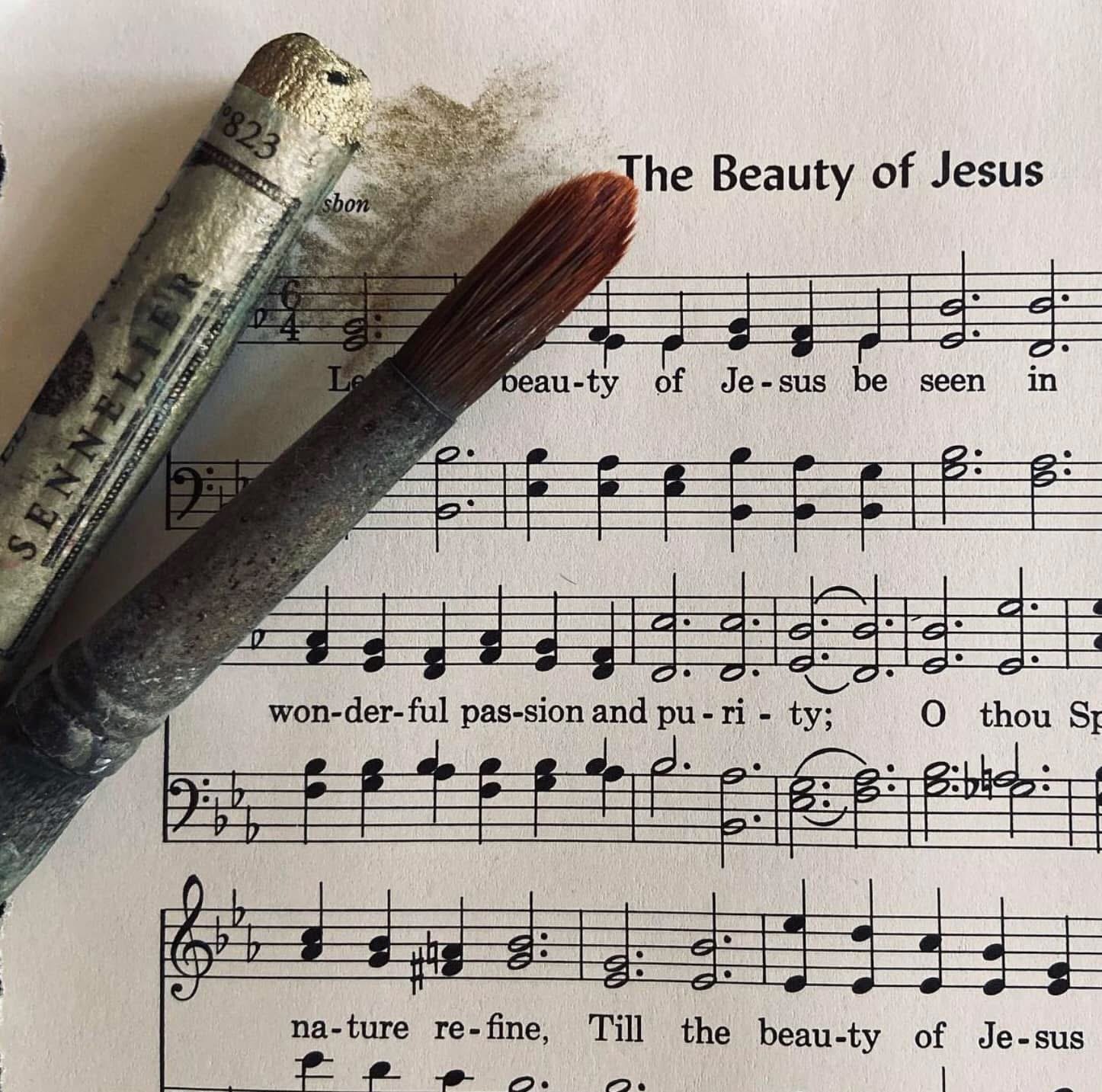
Not sentiment. Not nostalgia, or projection. But the reality that the God who authored the text is a living Person who feels, who speaks, who reveals Himself not only in the world of ideas, but also in the world of tone, intensity, and relational call-and-response.
Song of Songs refuses to let us ignore this.
“You have ravished my heart… with one glance of your eyes.” (I would encourage you to buy the little stand-alone book of the Songs of Solomon in the Passion Translation. Here’s a link.)
Who writes songs like that anymore? That line alone has caused generations of careful readers to shift in their seats. We prefer our theology orderly. Contained. With clean edges, not….ravished.
But here, right in the canon, is language that resists containment and demands response.
The Hebrew word often translated as “ravished” there carries a cluster of meanings that refuse to sit safe and still. Words like “stolen”. “Captivated”. “Undone”. “Overcome”. “Pierced”.
It denotes a heart made to beat faster. Each possible translation circles the same center, but none exhausts it.
This is not complexity for the sake of complexity. It is heavy density. Of emotion.
The language is reaching for something that cannot be flattened into a single English word because it is describing an experience, not just an idea. A moment of impact. A response.
We find revealed a God who has chosen to be ravished by us. A God who has chosen to be intensely relational.
And that choice matters.
Because, as they say, “once you see, you can’t unsee”. You begin to notice how much of our modern theological expression quietly edits it alllllll out. Not intentionally. Just gradually. We exchange the living texture of passion for something more manageable. More predictable.
Scottish theologian John A. Mackay (early 1900’s) saw this long before our current moment:
“It is better to approach religion with natural feelings than to come to it with aesthetic and orderly forms without dynamic power. One of the most important problems the church today faces is that it regards it lawful to express feelings in every field BUT religion. What the present church needs is to provide something that will inflame all the human passions. From the very moment the church is program-ised and depersonalized, it becomes merely a memorial of God instead of the living institution of the power of God.” ~ John A Mackay
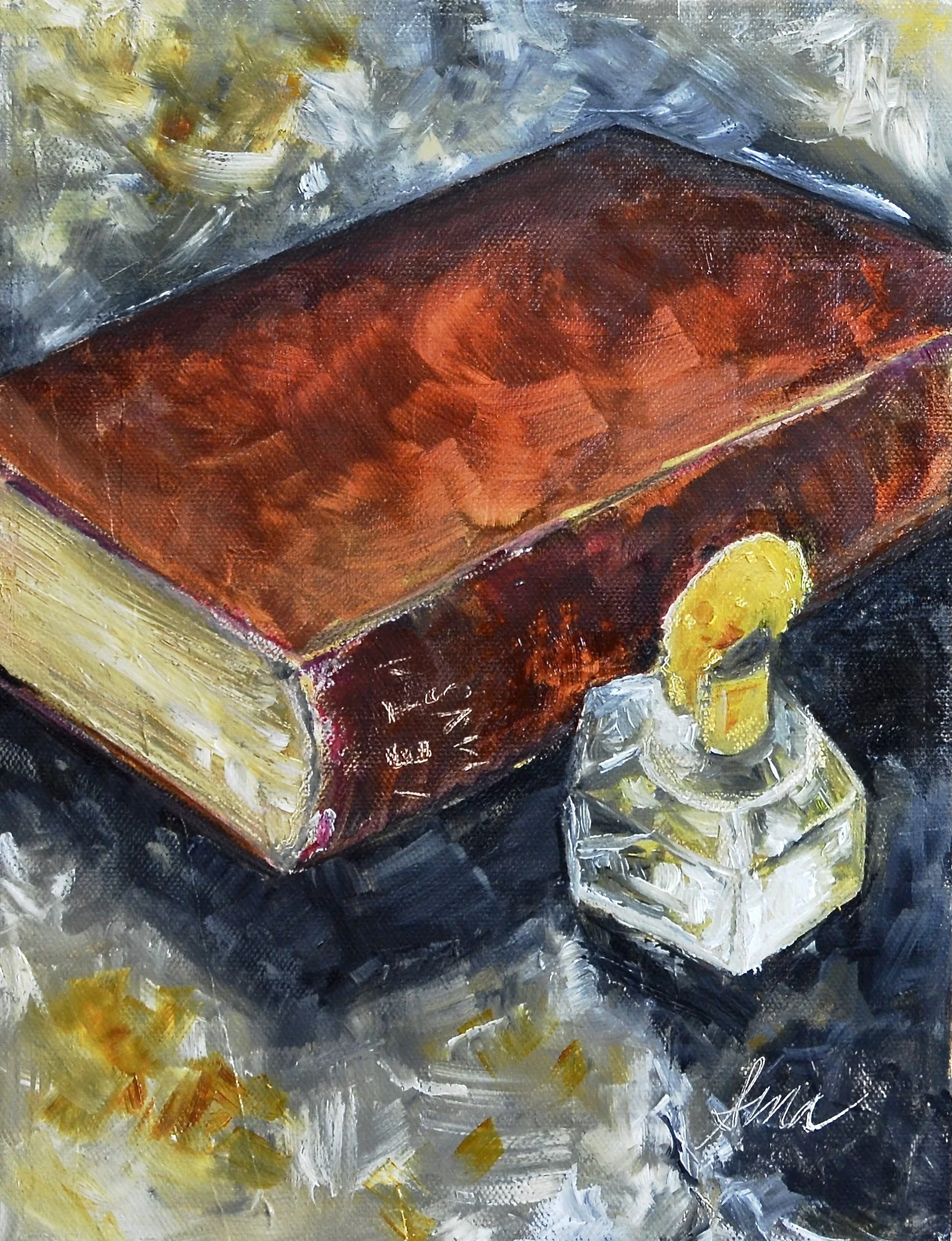
“My Tears, His Bottle, His Book”
He warned that religion can become aesthetic and orderly in a way that lacks “dynamic power”. That a church can slowly drift into a form that permits emotion everywhere else - except where it matters most.
That a church can quite seamlessly, without friction, become a memorial rather than a living institution.
He was not arguing in favor of chaos. He was arguing for life.
And life has weight to it. Heat. Movement. Passion is met with passion. We were created with mirror neurons, for heaven’s sake!
Our version of “orderly” today may look different than Mackay’s Scottish Presbytery, but the temptation is the same. Our “orderly” looks like dimmed rooms. Controlled environments, managed outcomes. Crafted Sermons. Carefully modulated voices. Theology that is precise, even true, but somehow insulated from the kind of encounter that would actually cost us something. We have learned how to present God without expecting Him to respond.
And yet nowhere in Scripture does it read that way.
From beginning to end, it is filled with raised voices, torn garments, songs that break open in the middle, prayers that sound more like wrestling than liturgy. Can we face it? Scripture is full of what can be only described as “antics”…excepting that Great Men engaged in them.
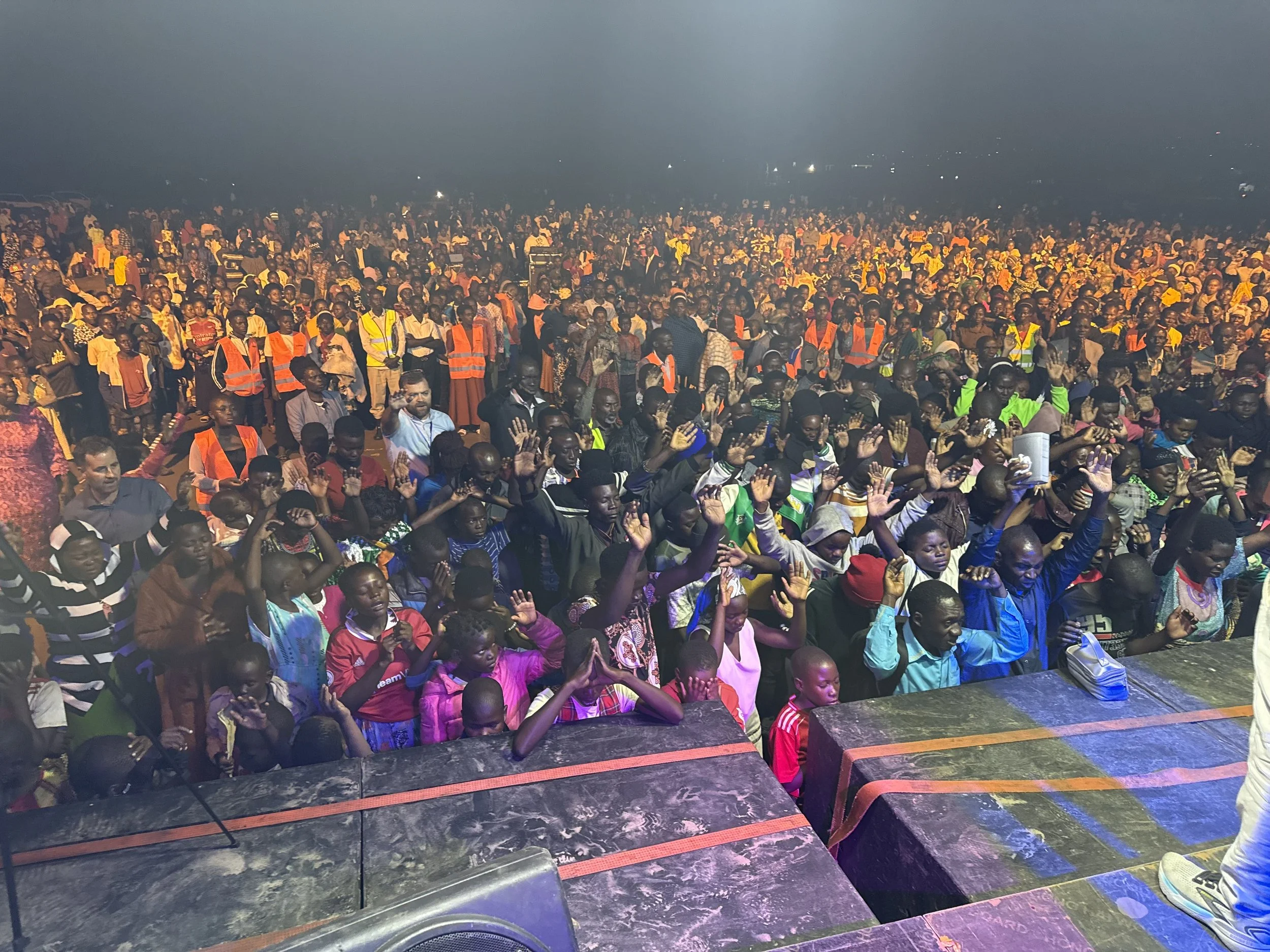
An image from Tim Atchley Global Ministries crusades in Uganda - where the lame walked, leperosy was healed, and blind had sight restored, and there was dancing in the field and the streets.
Scripture is not the record of a people considering a body of concepts. It is the story of a people encountering a God who refuses to remain at a distance.
Even in its most poetic moments, and really - especially there - we are given Biblical language that presses beyond explanation into participation.
The line in Song of Songs is not inviting us to speculate about divine emotion as a curious point of study. The words are revealing something about the nature of covenant.
There’s a thick emotional context.
We overhear words that indicate a type of promise that tells us God is not indifferent to the heart-attitude of His people. Words that reveal the fact that our attitude matters. That our response matters. That there is a real exchange taking place, not because God is lonely or lacking, but because He has willed a relationship in which our love is not imaginary to Him.
We need to tread carefully here.
There is a way of speaking about this that can become careless, as if God were at the mercy of human feeling. Scripture does not allow that. He is not fragile. He is not dependent. He is touched, the Bible says, by the “feeling of our infirmities”. Touched - not controlled, not consumed.
He has unlimited capacity to sweep us up into His great love, and yet He Himself is not swept along by us.
But neither is He distant.
The mystery of the Song of Songs is not that He is overcome with love. The mystery is that He is that eternally engaged, and ever seeking hearts that respond in kind. That He speaks in a way that allows us to understand that our worship is not performance into a void.
It lands. It is received. It is answered.
And oh how this changes the room! When the glory fills it, nothing else is needed, for sure.
Because once this kind of encounter becomes true for us, once the dance of call and response begins, sterile religion becomes harder and harder to maintain.
You cannot remain untouched if you believe you are actually interacting with a living God. You cannot indefinitely hide behind well-read language, if the One you are speaking to sees through it. You cannot reduce worship to a sequence, when it is, in fact, always an encounter..
This is where beauty re-enters the conversation, not as an ornament, but as a practice.
Beauty is not optional. Worshipping Him in the beauty of holiness is less about us and more about who He is. Beautiful worship is the fitting response to reality, when Reality is alive.
It is what happens when truth is not only understood but encountered. When something in you recognizes something in Him, and the response is not merely agreement, but delight, awe, even some sort of embodied movement…something akin to singing or dancing or pounding a drum or grabbing the nearest stringed instrument.
The church could use a little more volume. What it does not need, is manufactured intensity. It does not need to perform emotion. The church just needs to look at Him. Well and truly look.
It needs to recover permission. Permission to approach God as humans capable of grand emotions, humans who are actually seen. Actually known. Actually received. Permission to let the Scriptures read us as much as we read them. To allow their emotional weight to do its work without immediately making it mean something safer.
Permission to believe that the God who spoke those passionate words in the Song of Songs, meant them.
Mackay’s insight still stands. It is better to come to God with real, human feeling than with polished forms that carry no life. Better an honest voice, desiring the best gifts, perhaps genuinely seeking to prophesy, than a well managed outcome that can be obtained without the gifts of the Spirit..
But even releasing the dove through practicing the gifts of the Spirit, is only the beginning.
Because the invitation is not merely to feel more. It is to fully awaken.
To become a people whose inner lives are not dulled by overexposure and distraction, but sharpened by attention. By bringing our full humanity into the presence of God, not as a liability, but as the very place where He meets us.
Not to perform. Not to prove. But also not to merely respond by half-measures.
Ah, we best go all-in.
There is a line running quietly through Scripture that we have, perhaps, been too cautious to follow.
It leads away from control and toward encounter. Away from distance and toward nearness. Away from the idea of God as subject matter and toward God as Someone who speaks and is heard.
Someone who is good but not safe.
A God who does not intend for His people to be safe from many wild experiences of His goodness.