The Gospel Is Allowed a Zip Code
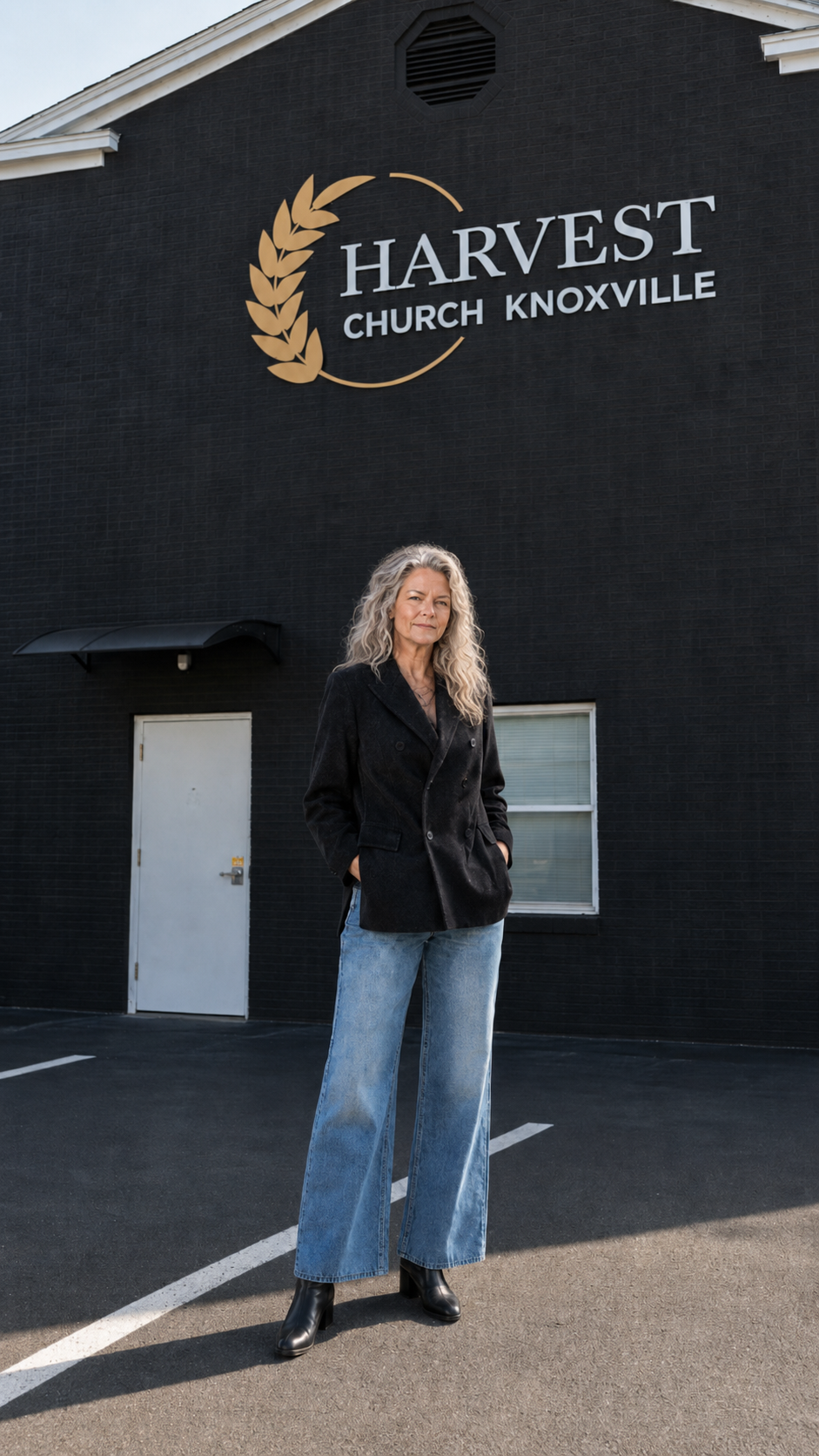
There is a theology floating around out there, well-meaning, earnest, occasionally a little smug, that goes something like this: “Real church is people, not buildings. Real faith doesn’t need four walls and a mortgage. Buildings are a distraction, maybe even a spiritual liability, evidence that a congregation has gone soft on mission and started loving its own comfort a little too much.”
I see people nod along to this, the way you nod along to things that sound humble and therefore must be true. I understand their point, and I know they mean well, but you need to know I have never once nodded my agreement to any of those opening statements.
I hope to explain myself.
I have never once lended my agreement to the idea that “real church is people, not buildings”. Not because I’ve gone lukewarm.
Not because I do not understand the difference between the bricks and the bride.
But because I’ve gone deeper. I’ve gone deeper into Scripture, into history, into the long, unbroken witness of a God who has never once been embarrassed by a tent or a temple or a building.
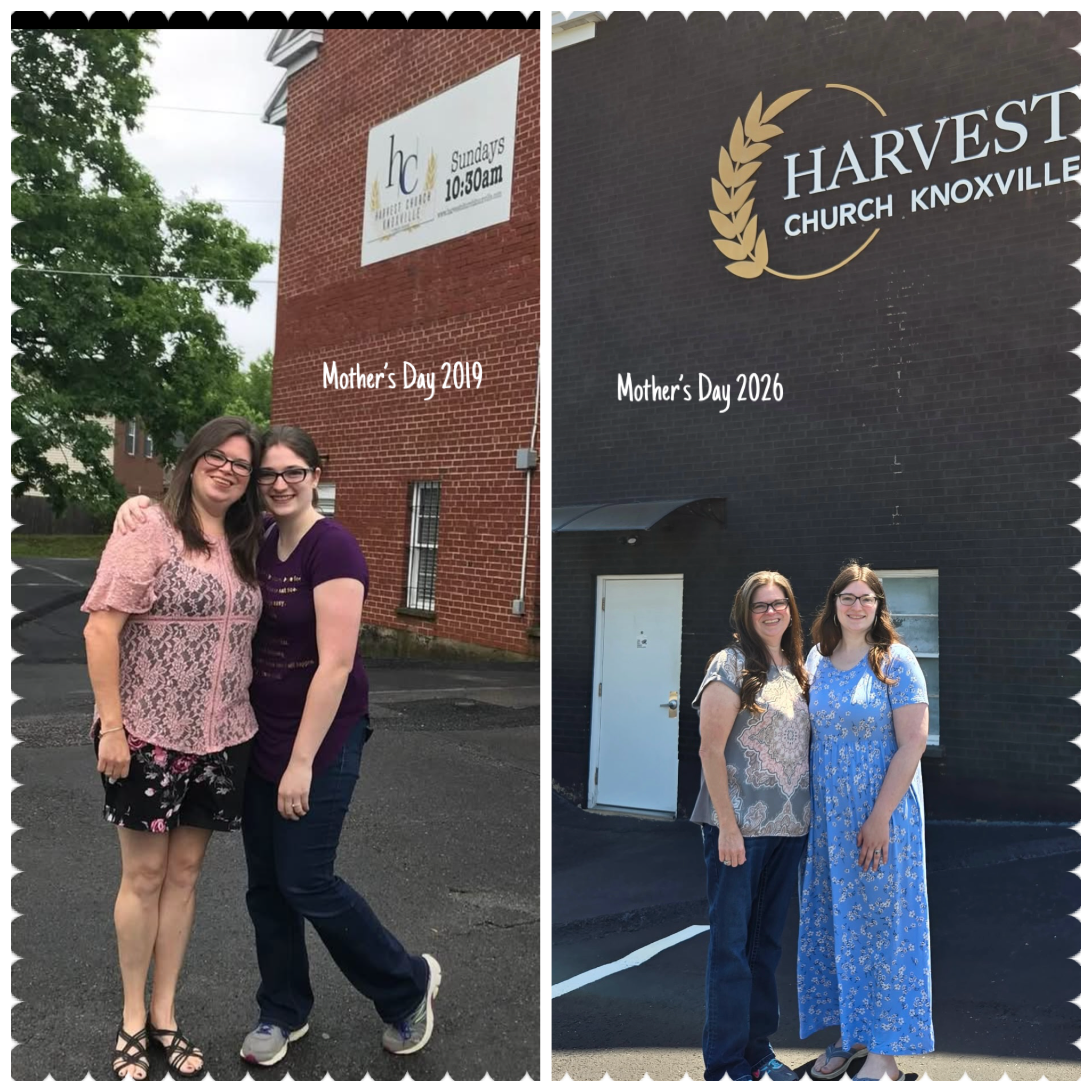
(two side by side images of two of my dear friends, in front of our church building before we invested a lot of resources into making it beautiful…)
Let’s start where the critics never seem to start: Haggai.
The people of God have come home from exile. They are building their own houses, “paneled houses”, the text says, which means nice ones, while the house of the Lord lies in ruins. And God does not applaud their humility. He does not commend their “focus on people, not programs.”
He sends a prophet to say, plainly and without apology: “Is it time for you yourselves to be living in your paneled houses, while this house remains a ruin?”(Haggai 1:4)
Read that again slowly. God was grieved that his house wasn’t built. Not because He needed a building, the heavens cannot contain Him, but because his people needed it.
Because the community needed it.
Because worship does not mind having a location, and the gospel, while it does not ‘need’ a placed to land, it loves having a place to land, it loves continuity, because the gospel always takes into account the way humans are made.
Many years ago, our church building was atrocious. And certain people (long since no longer with us) would inevitably complain, ever so subtly, when my husband would invest church resources into merely cosmetic updates. Yet their homes always received “the best”.
Fast forward. Here we are, all these years later, and we would not be in the position we are in - able to buy property for a new building - had we heeded the naysayers.
Our little building is beautiful. And its value is beyond what we could have imagined. It reflects the blood, sweat, and tears and resources of her people, and we are far from regret.
But, back to the gospel, and the way it takes into account human nature:
This is not a small theological point. It runs all the way back to Exodus, where God gave Moses forty chapters of detailed, specific, beautiful instructions for the construction of the Tabernacle. Colors. Dimensions. Materials. The kind of curtain rings to use.
God did not wave his hand and say, “Gather anywhere, the heart is what matters.” He said: build this, precisely, and build it beautifully, and I will fill it with my glory.
He meant it. He showed up.
Solomon built the temple and God inhabited it so powerfully that the priests couldn’t stand to minister. The Shekinah…the manifest, weighty, glorious Presence…filled the house.
1 Kings 8 is one of my favorite passages in all the Old Testament. It is one of the most luminous chapters in all of Scripture, and it is, at its center, a dedication service for a building.
That was then. What about the future? Well, the New Jerusalem, the final, redeemed, consummated city of God, whatever it will be, seems to have foundations, walls, gates, streets, dimensions.
God is apparently not done with architecture when all of time is rolled up like a scroll.
Now. I know what you’re thinking, and because someone will bring it up, let me bring it up first.
Stephen, in Acts 7, and Paul, in Acts 17, both made the argument that God does not dwell in temples made with human hands.
And they were right. But read carefully: they were not arguing against buildings. They were arguing against a dangerous idea: that God could be trapped in one. That a building could contain Him, control Him, or domesticate Him.
They were correcting idolatry, not construction.
The problem was never the stone. The problem was the presumption that the stone was enough, that you could have the address without the Presence, the form without the fire.
That is still the problem. And it is a problem of the heart, nothing else.
Build the building. Just don’t confuse it for God. (Which, at risk of repeating myself, has never been a problem for me.)
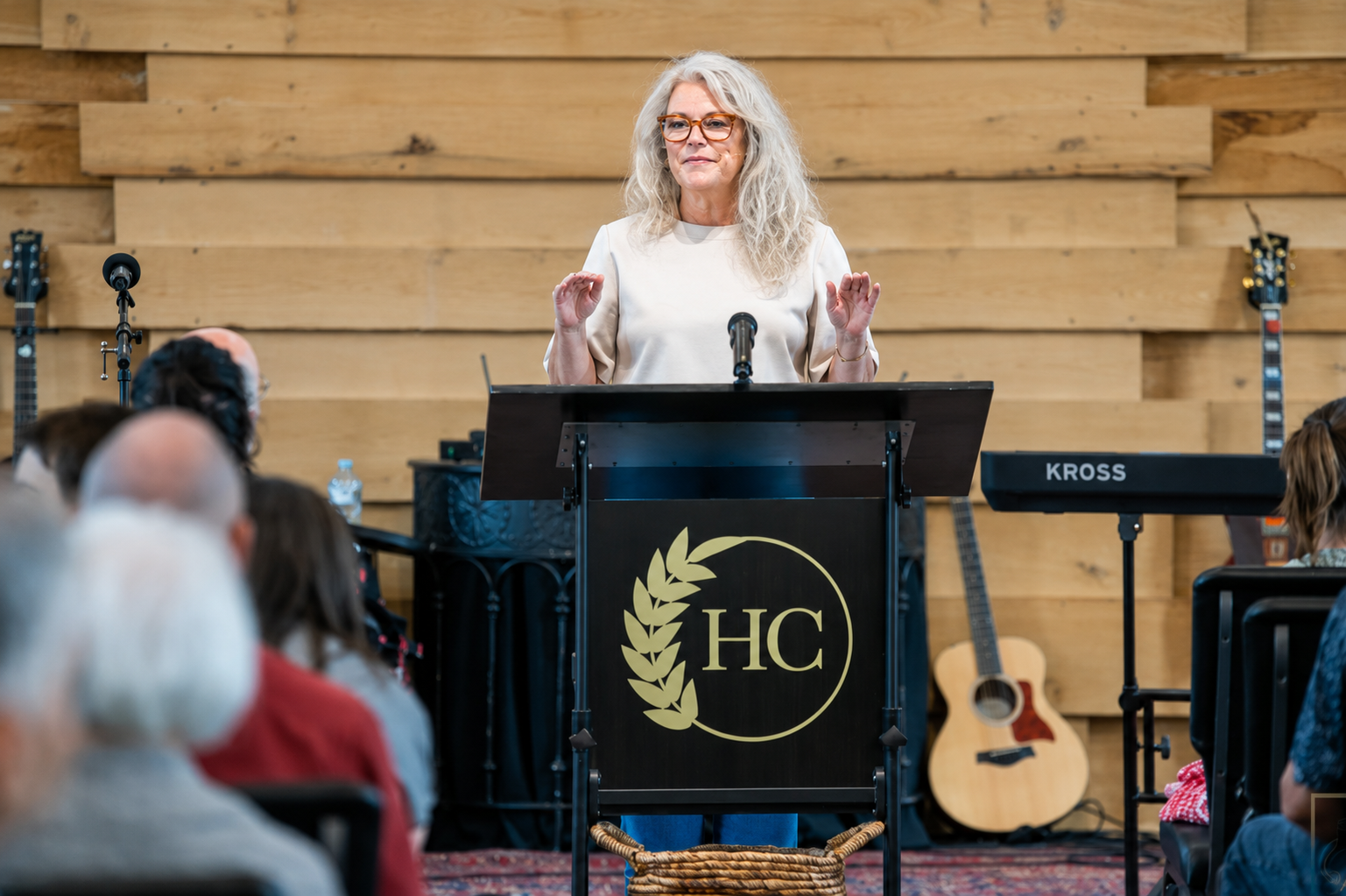
(I brought the word, two Sundays ago. Go back two blog posts to hear it.)
Here is what I know, from the inside of a church that is outgrowing its walls:
The building is not the mission.
But the building serves the mission, the way a body serves a soul.
You cannot separate them cleanly, not in this life, and call it holiness.
The Incarnation settled that argument forever! God himself took on flesh, took on an address, was born in a specific town in a specific province under aspecific census, and the Word became a dwelling among us.
If God was not embarrassed to need a ZIP code, neither am I. We need a roof and four walls and a parking lot and a nursery that smells like baby powder and a lobby where strangers can stand awkwardly until someone reaches out a hand.
We need a place where the Word goes out and a room where the broken come in and we need a sign on the facilities, and cars populating some suburban “paved paradise” on a Sunday morning so that the woman driving past on her worst day sees that someone is here.
Someone is gathered. Someone is holding the door open.
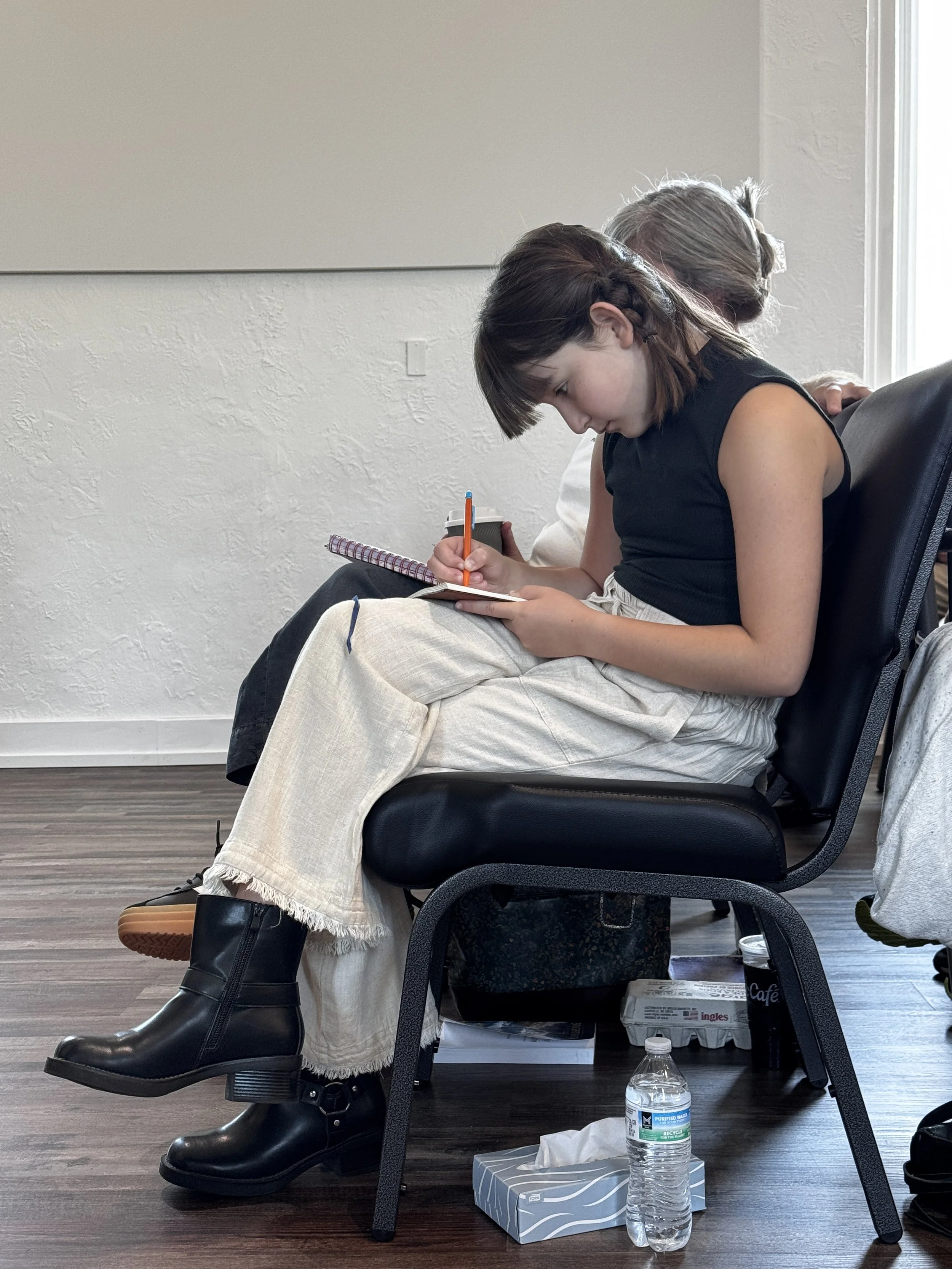
(One of my grand-girls, studiously taking sermon notes. Yes. At her age.)
I am almost sixty years old. My husband and I, we are not building for ourselves. I want to say that plainly. We would be wiser, humanly speaking, to set the cruise control. Our church is thriving.
We are past the need to see our names on anything, past the kind of ambition that is really just insecurity. We have been in ministry long enough to have buried many of our illusions, and we are grateful for it.
We are building for the ones coming behind us. Two generations ahead, at least. That’s the prayer. That is the specific, aching, particular hope.
That our people’s grandchildren’s children will walk through a door that we, as a church, both built and swung open.
And here is where the tears of this writer begin to flow:
That the gospel will have a footprint in this city because we were willing to risk everything, step out in faith, and leave something behind besides good intentions.
This is what legacy means, in the most “concrete”, literal sense.
Legacy is not a feeling. It is not a memory someone carries. Legacy is an act. It is something built, something planted, something that outlasts your own heartbeat and keeps bearing fruit in the cold ground after you are gone.
Abraham built altars. Nehemiah built walls. Solomon built a Temple. The early church met in homes until they could build more. Down through two thousand years, the people of God have planted “flags” in the physical world. “Flags” of stone and mortar, roof and address, and all of them were saying: the gospel was here. The gospel is here.
Come and see.
I can’t believe what I am about to say:
We are selling our beautiful little building. Our final Sunday will be in less than a month.
We are moving to a “tabernacle” of sorts. A temporary space.
And then we are building a church. It will be our biggest step of faith, yet. It will be a simple building, all one level (Oh…you have no idea…such an important thing for us) where we will literally expand “from the left to the right”. A building with a foundation and windows to let in light, and a place for children to learn and play. It will have a street address and a hope and a future that reaches two and three generations ahead.
And we are not the least bit sorry about it.
Establish the work of our hands, Lord. Establish it.
—Psalm 90:17